
Part 1: Why Traditional IT Governance Falls Short
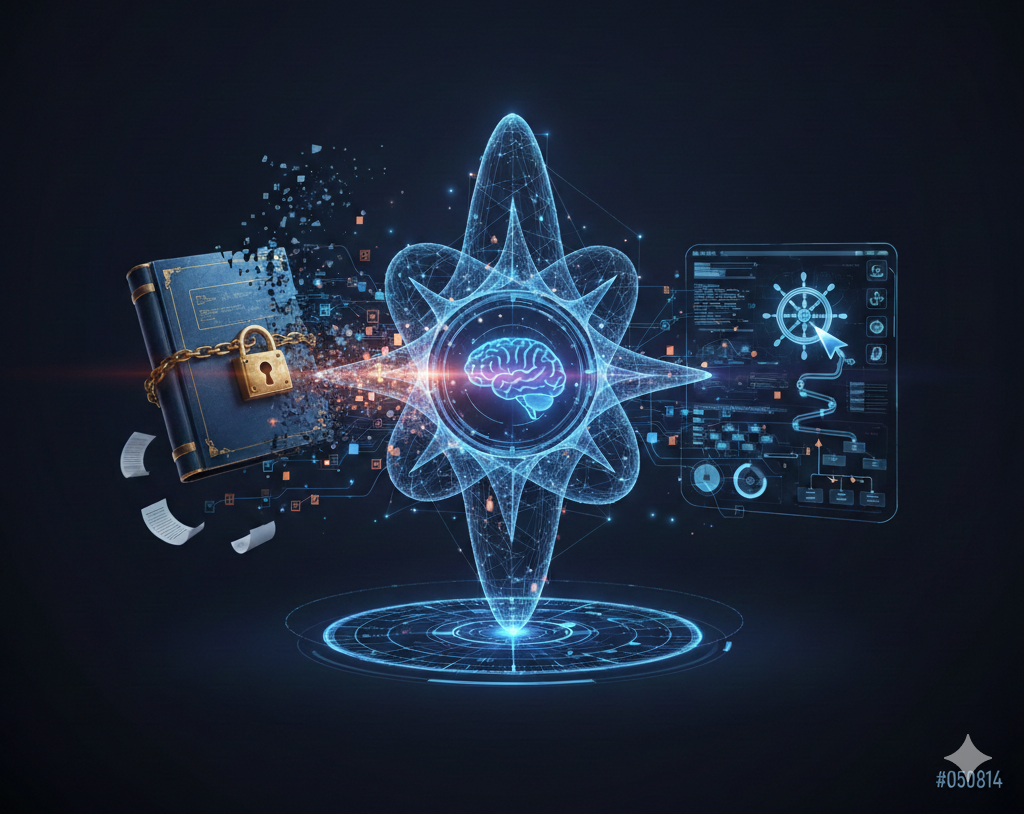
Have you noticed how safety guardrails can become invisible barriers over time?
In IT, rigid compliance rules once made us feel secure. But today, as digital risks evolve faster than ever, these same routines may be holding us back from real resilience.
Many organizations still rely on classical IT governance frameworks to ensure control and compliance. This is okay as those models delivered value so far, and provided basic operational discipline and effective risk management. However, the IT environment is radically getting more complex and fast-moving than it was a decade ago. Governance by checklist is under pressure. Static documentation, periodic reviews, and siloed oversight can’t keep up with emerging threats or real-time business needs.
Traditional governance can’t anticipate novel threats like AI misuse or deepfakes that evolve rapidly. For example, generative AI can produce convincing fake audio/video, posing new risks that annual policy reviews won’t catch.
Executives need instant insight, not after-the-fact audit reports in a crisis. Old models fail to support real-time decisions when ransomware hits 2 AM or a supply chain AI system goes rogue.
Cybersecurity, AI ethics, and operational continuity risks often remain separate in old governance structures. They struggle to unify cyber, data, AI, and third-party risks into one coherent, up-to-the-minute view for leadership.
In short, what once functioned as a seatbelt now needs to become a navigation system. Traditional governance gives a false illusion of safety; paperwork might all be in order, while the organization is vulnerable to fast-moving digital dangers.
It’s time to replace the checkbox mentality with something more intelligent and adaptive.
To understand why IT governance must change, look at how the landscape has changed around it. We are operating in an AI ecosystem marked by blistering velocity and constant exposure to new risks:
- Customers, partners, and employees now expect AI-powered capabilities on demand. This pressures IT to rapidly deploy AI solutions, which means new algorithmic risks and unknowns.
- From ransomware-as-a-service gangs to AI-assisted phishing, digital threats are more innovative, faster, and more targeted than ever. Attackers are weaponizing AI, and by 2027, 17% of cyberattacks may involve generative AI, rendering reactive defenses inadequate.
- New regulations are converging, besides the EU’s NIS2 and DORA, the proposed AI Act, and stricter SEC cyber disclosure rules. This creates overlapping compliance burdens and scrutiny like never before. Regulators and boards started to ask, “Do you have a plan?” but “Can you prove, in real time, that you can withstand disruption and still operate safely?” Compliance has started to become a live, ongoing test, not a one-time certification.
- Unmanaged technology can turn governance into a moving target. Employees are embracing “Shadow AI” and using AI tools like LLMs without IT’s knowledge, which can lead to severe data leaks and compliance violations. For instance, Samsung had to ban employee use of ChatGPT after sensitive code was accidentally leaked in 2023. Shadow IT and fourth-party SaaS tools are everywhere, meaning your IT footprint is fluid and partially invisible.
This is the new battlefield for IT governance: governing at machine speed across decentralized, AI-driven operations under relentless regulatory pressure.
The Stakes
- 70% of CEOs are instilling a culture of resilience in their companies by 2025. (Gartner).
- At least half of C-level executives will have their performance tied to managing cybersecurity and operational risks. (Gartner).
- Boards are adding cybersecurity experts to their ranks (Gartner predicts 70% of boards will include a cyber-trained director by 2026 ) to ensure oversight of these new dangers.
In this environment, governance can’t be an occasional checklist; it must be a continuous, dynamic function embedded into daily operations. In the end, clinging to the comfort of old governance models is risky. The next wave of technology calls for something radically different.
In Part 2, I'll try to explain what IT governance could be if we designed it to empower people, unleash innovation, and adapt as fast as the threats themselves. Ready for a new blueprint?