
Part 2: Rethinking Governance: Empowering People and Leading with Accountability
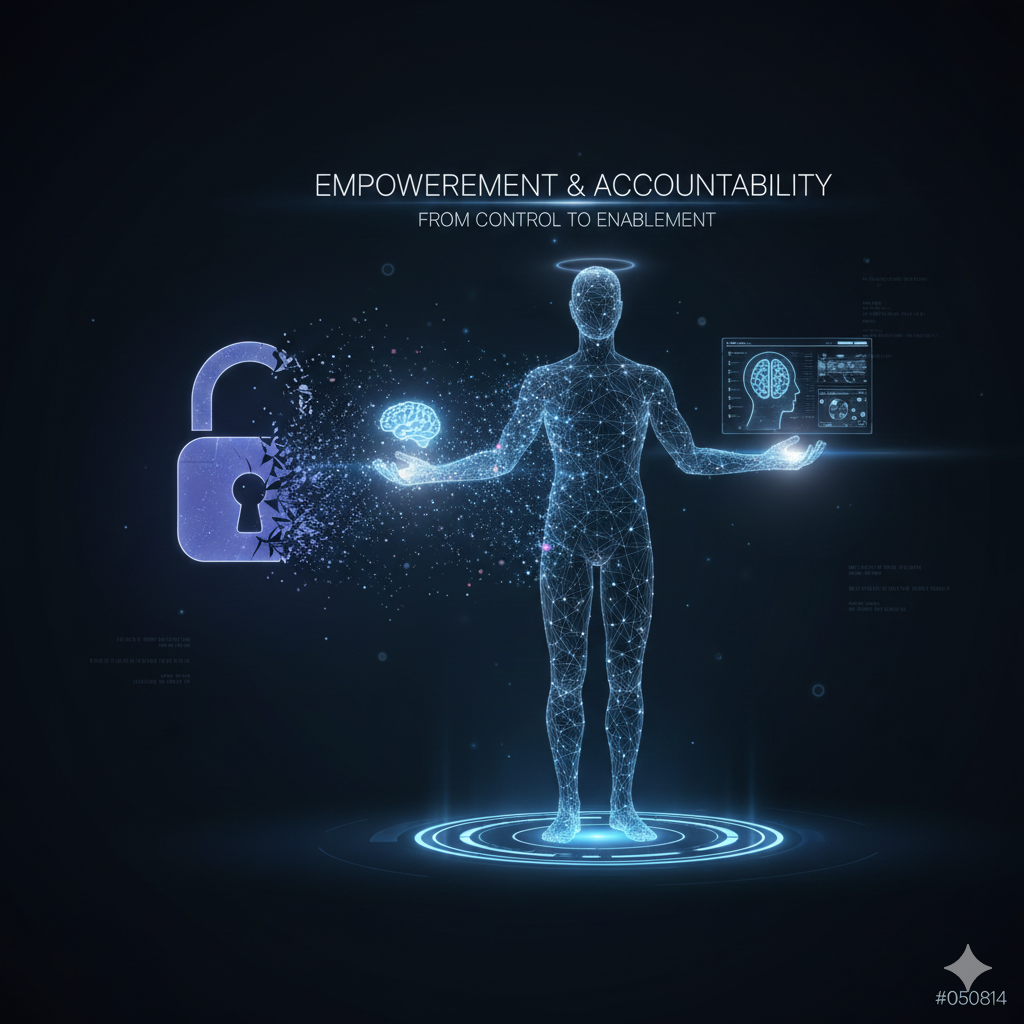
What does a reinvented IT governance look like?
In a word, dynamic.
It’s about shifting from static frameworks to an adaptive mindset, where IT governance is less about enforcing rules after the fact and more about guiding safe innovation in real-time. Think of it as moving from “checking the box” to “steering the ship”.
Key characteristics of this new governance mindset include the following:
Proactive and Predictive!! Rather than reacting to incidents, governance uses live risk intelligence and AI analytics to predict and prevent issues. It’s always watching the road ahead (trends, early warning indicators) instead of looking in the rear-view mirror of last quarter’s audit. High-maturity organizations are beginning to integrate AI into GRC to inform decision-making and enable real-time monitoring.
Policies and controls evolve as quickly as threats and business needs grow. Instead of heavy, one-size-fits-all policies, you establish modular “guardrails” that can be tightened or loosened based on context. For example, a low-risk innovation project might be given more freedom to experiment, while a high-risk AI handling customer data gets stricter oversight and a tiered governance model. The rules aren’t static; they adjust to the level of risk.
Governance isn’t a separate bureaucracy woven into day-to-day workflows and significant decisions. Teams consult live dashboards and automated checks as they plan projects or deploy new tech. This could involve integrating AI-driven compliance checks into your software deployment pipeline or creating real-time risk dashboards that both teams and executives review during regular meetings.
A reinvented governance is board-visible and C-suite friendly, translated into clear, actionable metrics and dashboards, not dense policy documents. CEOs and boards should be able to see the organization’s risk posture and resilience at a glance. If governance is doing its job, it provides leaders with a “navigation screen” that shows where the risks are and how well the organization handles them in real-time.
Crucially, this new approach is people-centric and enabling. It recognizes that people, not just processes, are at the heart of effective governance. Instead of treating employees and teams as subjects of control, it empowers them with autonomy within safe boundaries.
Governance becomes the supportive scaffolding that lets people innovate confidently.
Teams are given clear objectives and metrics and then granted autonomy in meeting them. The leadership defines what goals must be achieved. It sets the guardrails. Within those bounds, people have the freedom to experiment and get creative.
People on the front lines shape governance. A dynamic governance model listens to developers, analysts, and business users about what controls cause unnecessary friction and what risks they see. This collaborative approach means governance policies are continuously refined via feedback loops rather than enforced top-down with no questions asked. It fosters trust and shared responsibility, rather than the old culture of fear and compliance.
In practice, this could mean the difference between teams quickly leveraging a new AI tool to gain a competitive edge (because guardrails were in place to use it securely), versus being stuck in analysis paralysis or rogue experimentation because governance was too heavy or completely absent.
Reinventing IT governance isn’t just an IT department initiative; it must be championed from the top. In the AI-first era, governance has become a strategic concern of the C-suite and board. Why? Because the stakes are existential: major technology failures or security breaches can significantly impact stock prices, lead to regulatory penalties, and erode customer trust overnight. Forward-looking CEOs and board directors have realized that adaptive tech governance is as critical to the business as financial governance.
Several shifts underscore the growing role of top leadership here:
- Most CEOs strive to instill a culture of resilience throughout their company. CEOs should set the tone for encouraging intelligent risk-taking, with the proper guardrails in place. The message is clear: we won’t punish responsible experimentation, but we also won’t tolerate reckless IT practices.
- Board directors increasingly integrate cyber and IT risk into their oversight duties. New regulations (like the SEC’s 2023 rules) explicitly demand that boards understand and report on cyber risks. Accordingly, boards are bringing in expertise. Boards are asking more challenging questions, and IT leaders must provide concise, data-driven reports (or live dashboards) about resilience, rather than 200-page policy binders. We’re even seeing some boards form Technology Risk subcommittees to focus on these issues on a regular basis.
- The C-suite is breaking down silos between risk, compliance, IT, and business units. In a proactive governance model, CIOs, CISOs, Chief Data Officers, HR, and legal must collaborate. Risks such as AI ethics and data privacy cut across traditional roles. Leadership may establish governance councils or working groups that include executives from multiple domains to ensure a unified approach to decision-making. When the board asks, “Are we in control of our AI usage and cyber exposure?”, it’s no longer just the CIO or CISO answering; it’s a coordinated response backed by input from across the enterprise.
- Top executives are now held accountable for the outcomes of tech governance. This represents a significant shift; bonuses and careers are now tied to maintaining the organization's safety and compliance. CEOs lose their jobs after major data breaches, a wake-up call. In the future, expect metrics such as the “cyber resilience index” or the “percentage of projects meeting governance standards” to appear in executive scorecards. The upside is that when leadership’s skin is in the game, they are far more likely to prioritize investments in governance capabilities.
When leaders talk about IT governance in strategy meetings, it should be about how it enables the company to pursue bold opportunities safely. In this way, IT governance becomes a competitive advantage. The companies whose leadership nails this will be able to innovate faster and with greater confidence than those flying blind or stuck in bureaucracy.
Next time, I’ll get hands-on: sharing five practical steps that any organization can take to bring dynamic, people-powered IT governance to life, starting right now.